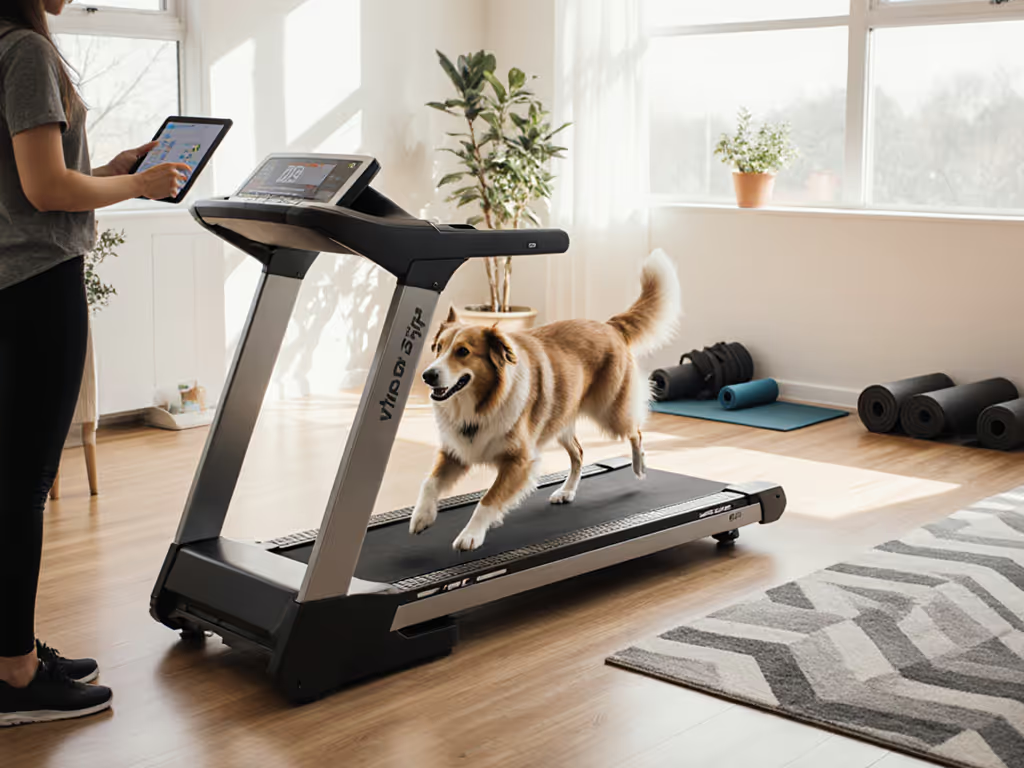
Active Dog Treadmill Review: DogPacer LF 3.1
17th Dec•7 min read
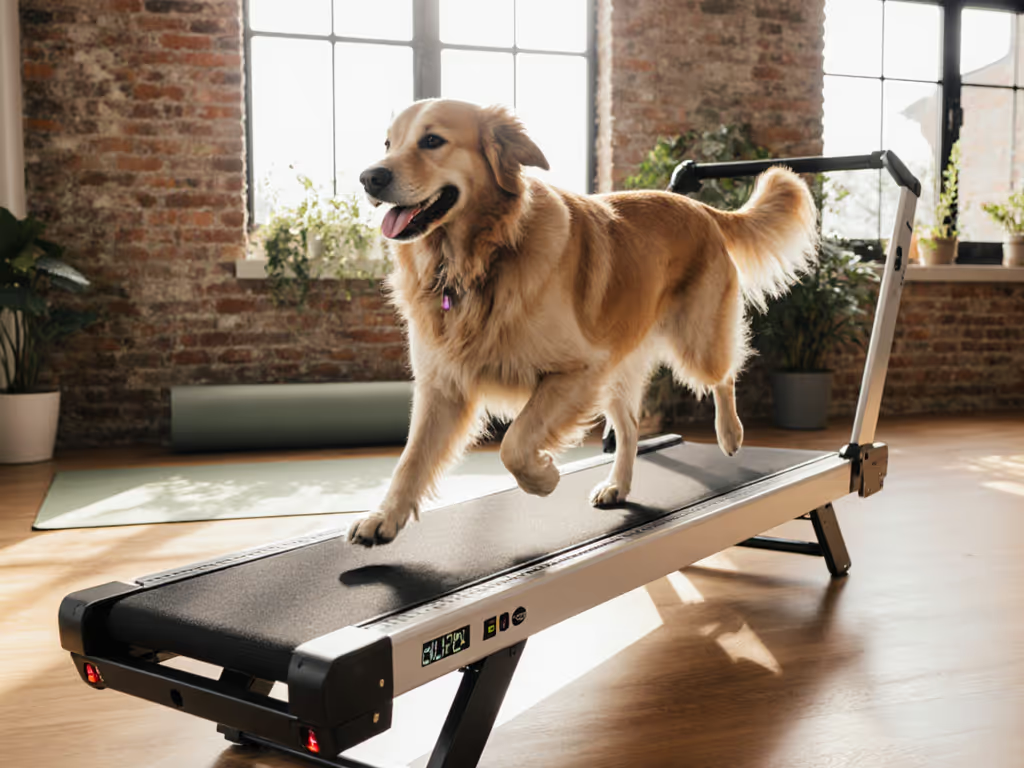
If your high-energy dog is bouncing off walls at 11 p.m., destroying couch cushions in frustration, or yanking through every walk despite your best efforts, you've already sensed it: the gap between what your dog needs and what your schedule can deliver. A high-energy dog treadmill isn't a shortcut to exhaustion; it's a controlled, repeatable outlet that fits your life. But choosing one that actually protects your dog's joints while meeting their drive is another matter entirely.
As a Belgrade-based ergonomics specialist who has spent years advising guardians on safe movement setups, I've seen treadmills transform anxious households and build resilience in working dogs. I've also seen them misused (wrong surface, too-fast progression, no warm-up), causing soft-tissue strain in joints that were already vulnerable. This guide cuts through the noise. I'll walk you through what makes a SportPet CanineTreadmill (or any treadmill) genuinely joint-sparing, how to size and progress safely, and the practical checkpoints that separate a wise investment from an expensive paperweight.
Herding breeds, sporting dogs, and working-line mixes didn't evolve to settle on a 20-minute walk. Their nervous systems are wired for duration, precision, and mental engagement. [3] When that need isn't met, the energy converts into reactivity, destructiveness, obsessive behaviors, or chronic stress that compounds with age.
The problem is that outdoor exercise is unreliable. Weather cancels runs. Dark winter months shrink daylight. Extreme heat (a fact confirmed by climate data) now routinely exceeds safe outdoor thresholds in many regions during peak months. Reactive dogs can't safely access dog parks. Apartments have noise curfews and no yard. For remote workers and shift workers, the time math doesn't add up.
A treadmill creates a controlled variable. For the bigger picture on how structured exercise calms behavior, read our Calm Your Dog: Exercise Benefits Guide. You own the surface, the temperature, the duration, the progression rate, and the warm-up phase. That predictability (comfort is a training aid) means your dog learns to regulate arousal on a treadmill more easily than during chaotic outdoor play. And comfort also means your joints are protected; the controlled impact forces allow you to monitor form, adjust intensity, and intervene before injury happens.
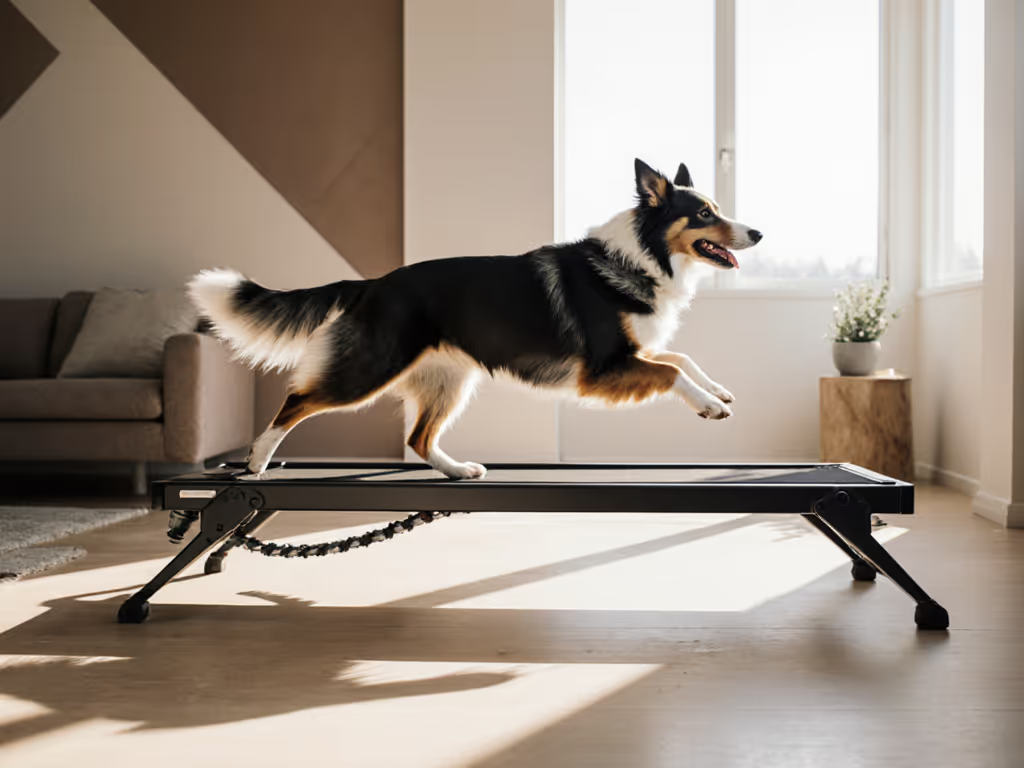
Not all treadmills are designed the same way. A generic human treadmill will injure a dog's shoulders and hips within weeks. Dog-specific designs account for canine biomechanics: the angle of the hips, the neutral spine position, and the way paws naturally track.
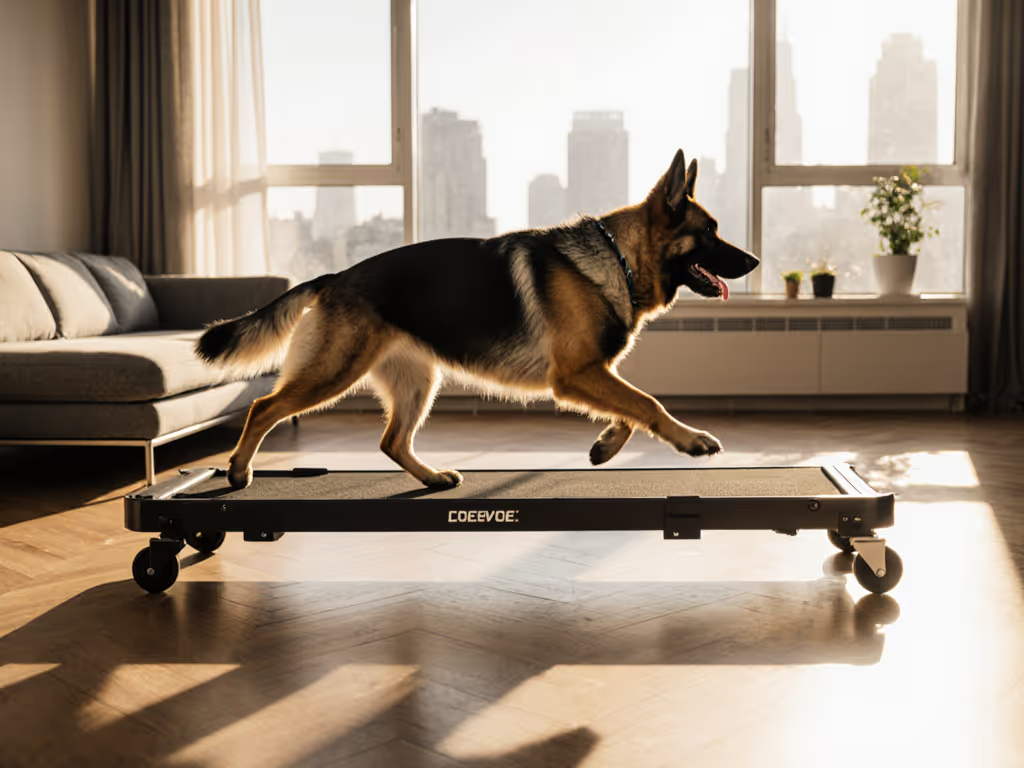
The best dog treadmill for you should be at least 2.5 times the length of your dog from nose to tail base. [3] This matters because a cramped runway forces your dog into a hunched posture that overloads the lower spine and stifles stride extension. Conversely, oversized platforms confuse puppies and senior dogs who need tactile boundaries.
For a border collie or similar herding breed (20-26 inches long), you're looking at a platform at least 50-65 inches. Medium-sized treadmills typically run 48-60 inches; larger models exceed 70 inches. Width should also allow your dog's front and rear paws to track straight without edge anxiety (roughly 20-30 inches is the practical range for medium to large breeds).
The running belt matters far more than marketing usually admits. Look for:
Treadmills should offer low speeds for warm-up and cool-down (0.5-1 mph), as well as high speeds for sprint training (up to 10 mph for larger breeds), with at least 10-15 increments in between. [3] This lets you design a thoughtful progression ladder instead of jumping from 2 mph to 6 mph.
For a herding breed or high-drive dog, speed flexibility is essential because you're not always aiming for maximum velocity. Early sessions might hover at 1.5-2 mph just to build familiarity. By week 3-4, you might push to 3-4 mph at steady state. Only after 6+ weeks of consistent sessions (if your dog shows no lameness, no panting distress, and maintains clean movement) do you incrementally approach higher speeds.
Consider whether the treadmill has manual or electronic incline adjustment and what the maximum incline angle is (typically up to 15%). [3] Incline adds muscular demand without raising speed, which is why it's useful for fitness gain and joint safety. A 5-10 degree incline activates the glutes, hamstrings, and stabilizers more than a flat belt, which means shorter sessions can yield the same fatigue, and thus more joint-sparing overall.
Electronic incline (via buttons or app) lets you adjust mid-session without stopping, which is cleaner than manual ratchets that break flow. However, mechanical treadmills (discussed below) often lack electronic incline but compensate with other joint-protective design features.
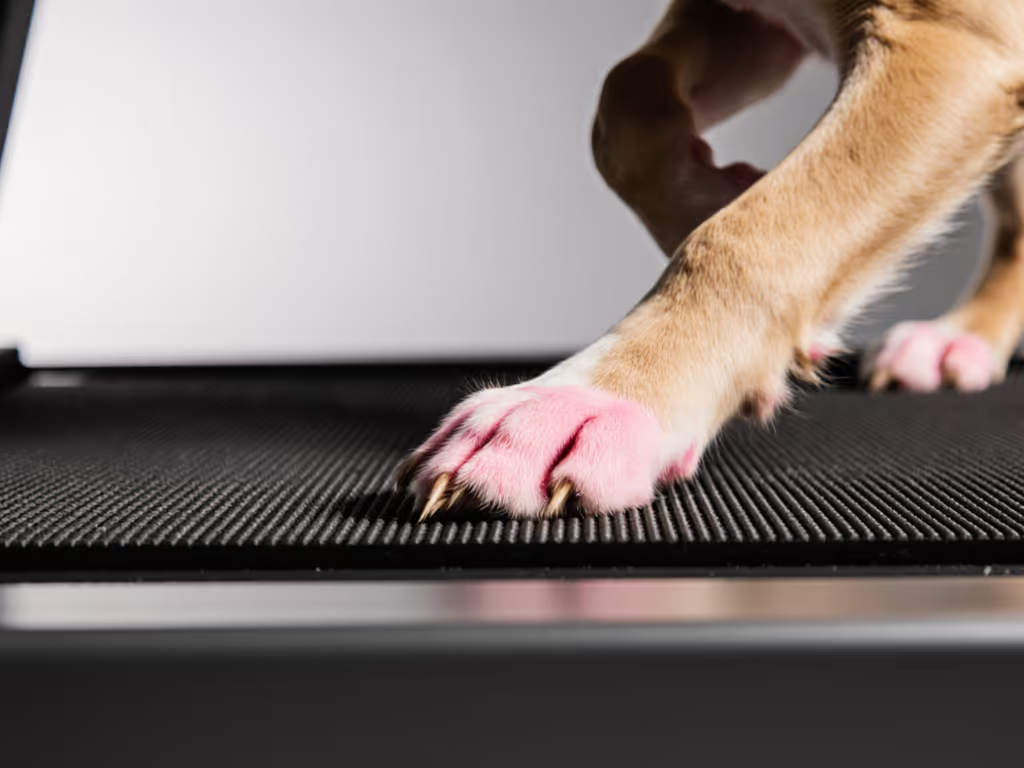
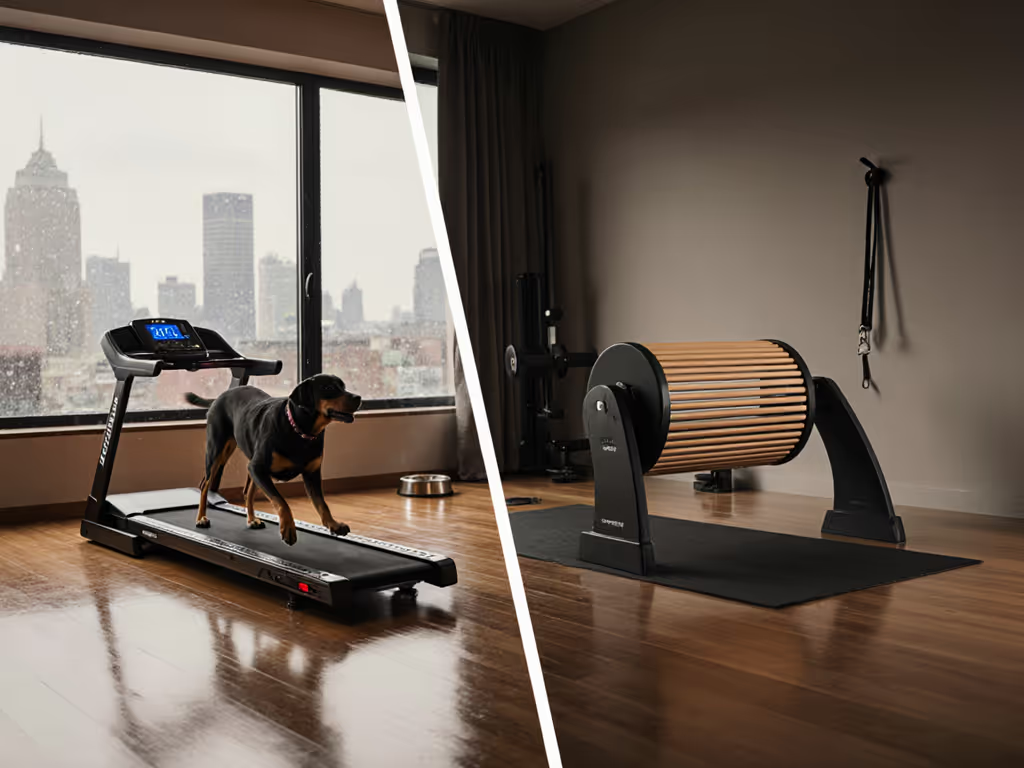
Most commercial treadmills are electric-motor driven. Not sure whether a slat mill or motorized unit fits your dog best? Start with our slat mill vs treadmill comparison. They're predictable, programmable, and easiest for beginners. But there's a growing case for mechanical (non-motorized) treadmills.
Firepaw manufactures dog-specific mechanical treadmills, emphasizing that your dog is not forced to run; it can stop anytime if it doesn't want to run or there is a trauma. This is impossible with popular generic electric treadmills for dogs. In addition, the dog can achieve its maximum in speed, stamina, and fulfill its full physical potential, all controlled by itself. [5]
The logic is compelling: a dog controls the pace, which means the dog self-regulates effort and can slow down if pain emerges. With an electric belt, the dog runs at the programmed speed or risks falling. That's why electric treadmills demand strict supervision and a clear off-ramp (an emergency stop button or manual intervention).
Especially look for emergency stop buttons or safety keys, side rails or panels to prevent falls, and non-slip running surfaces if you choose an electric model. [3]
For a first-time guardian or a dog with any history of anxiety, mechanical treadmills remove the paradox of forced pace. For experienced handlers who understand their dog's threshold, electric models offer more programmable control and data tracking.
Not all high-energy dogs are created equal. A 6-month-old border collie and a 10-year-old working spaniel have completely different treadmill profiles.
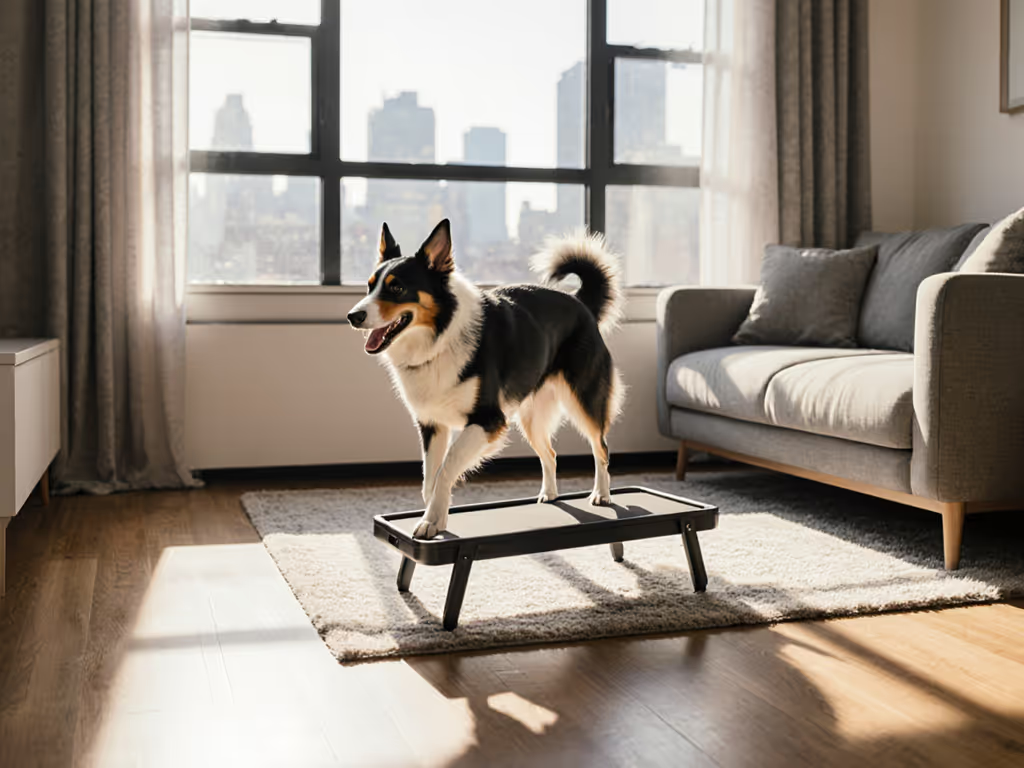
Growth plates remain open until roughly 12-18 months (larger breeds can extend to 24 months). See our puppy exercise equipment guide for joint-safe options until growth plates close. High-impact, high-speed work before plates close can trigger irreversible cartilage damage and early-onset arthritis.
For a growth-phase puppy:
I worked with a foster dog (a 5-month-old retriever mix) who suffered a soft-tissue strain after a single high-speed session on a flat, rigid treadmill. Instead of pushing speed, we shifted to ground poles, low platform work, and steady ramp sessions at 1-1.5 mph. We measured paw placement frame-by-frame, shortened turn-arounds, and logged two-minute wins. Five weeks later, her gait smoothed, zoomies returned naturally, and re-injury didn't follow. The principle holds: small, precise choices turn potential chaos into comfort.
Older dogs and those with joint involvement need warmth, duration over speed, and graduated resistance. For product picks tailored to aging joints, see our arthritis-safe senior dog exercise gear. Motorised dog treadmills are a perfect fit for elderly dog owners [1], specifically because electric control allows gentle, consistent pacing without the dog having to drive the belt itself.
For a senior:
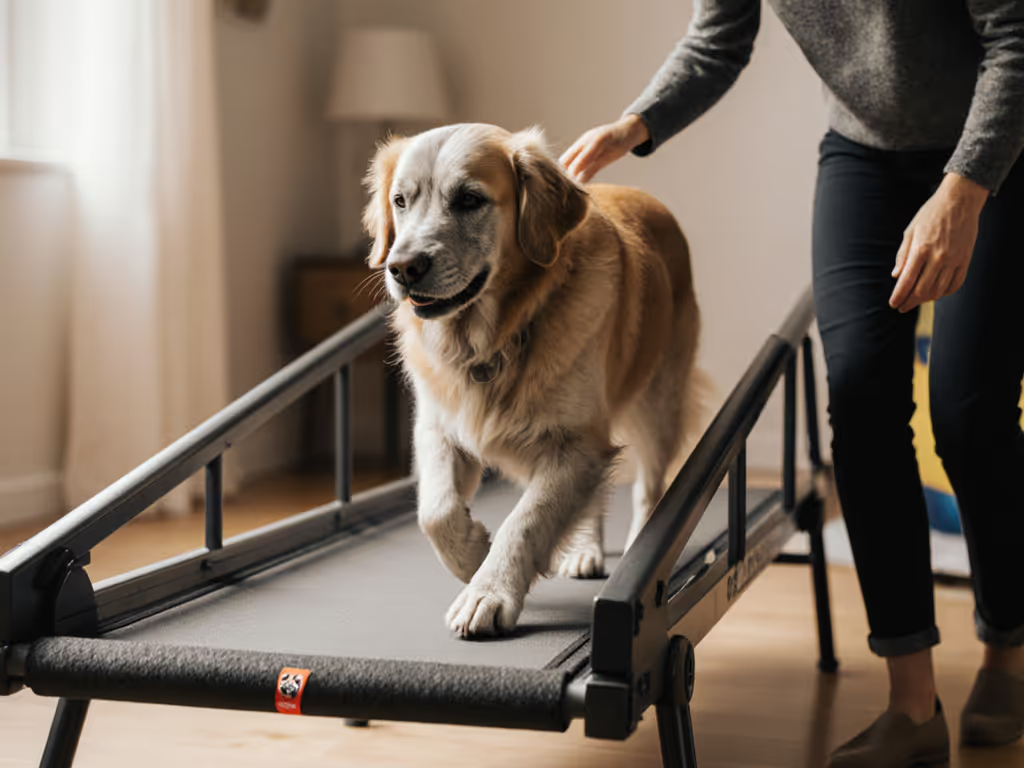
This is where most treadmill mistakes happen. Before you start progressing speed or incline, review our dog exercise safety guide. An owner gets excited about fitness gains and runs the dog hard immediately. The dog loves it (adrenaline masks fatigue). Two days later, the dog is limping or refuses the treadmill.
Protect the joints today to unlock fuller movement tomorrow. Here's the structure:
Start at 0.5-1 mph with no incline. Let your dog settle into the rhythm. Watch for:
Don't increase speed until you see three consecutive stride cycles that look easy and loose.
Once warmed up, you can increment speed or add incline based on your goal and your dog's training age:
At every stage, watch for panting intensity. A working dog will pant; that's normal. But if your dog's tongue is fully extended, drooling, or you see a glazed eye, drop the speed or stop entirely.
Drop back to 0.5-1 mph with no incline. Let heart rate settle. This prevents blood pooling, allows heart rate to normalize gradually, and signals to your dog's nervous system that intensity is over. A rushed cool-down, or no cool-down, leaves your dog in a sympathetic (fight-or-flight) state, which can trigger rebound hyperactivity or anxiety.
The best treadmill is one you'll use. This means:
Most dog treadmills range from 4-7 feet long and 2-3 feet wide. If you live in a 600-square-foot apartment, a massive commercial unit isn't realistic. Motorised dog treadmills featuring adjustable speeds and foldable designs make them an excellent choice for busy professionals and elderly dog owners, ensuring that both small and medium sized breeds can benefit from a tailored workout in the comfort of their home environment. [1]
Before purchasing, measure your space (including width for folding, if applicable) and decide: Will this live in your living room permanently, a garage, or a closet on wheels?
Electric treadmills hum. The belt creates a rhythmic whooshing sound. In a shared wall apartment or a home with light sleepers, this matters. Mechanical treadmills are quieter but require more user-driven coordination. If noise is a dealbreaker, consider alternative high-energy outlets: swimming, spring-pole work, or structured play circuits.
Some dogs love treadmills from day one. Others need weeks of positive association (treats, play, short sessions) before they'll hop on. And some dogs plateau; they stop finding the treadmill novel, and motivation wanes.
To sustain interest:
| Criterion | Priority | Check Box |
|---|---|---|
| Dog Size Match | High | Length ≥ 2.5 × dog length; width ≥ 20 inches for most breeds. |
| Weight Capacity | High | Ensure capacity exceeds your dog's current weight + 20 lbs (room for growth or miscalculation). |
| Surface Quality | High | Non-slip texture, shock-absorbing layer or belt give, no extreme heat buildup. |
| Speed Range | High | 0.5-10 mph minimum; at least 10 increments for smooth progression. |
| Incline Options | Medium | Manual or electronic incline; 0-15% range preferred. |
| Emergency Stop | High | Physical button or key on leash (electric models only). |
| Warranty | Medium | 2-3 years frame and motor; coverage for dog-inflicted wear. |
| Noise Level | Medium | Confirm through reviews or video demos if living in shared spaces. |
| Foldability & Storage | Medium | Folds compactly if space is limited; check final dimensions. |
| Brand Support & Manual | Medium | Clear setup instructions, video guides, responsive customer service. |
Not every dog is suited for treadmill work, and not every session will go smoothly.
Stop immediately if you observe:
In any of these cases, consult your veterinarian before the next session. A single session rarely causes lasting harm, but pushing through early pain signals can build into injury.
Also consider professional guidance if:
Quality dog treadmills range from $300 to $3,000+. The difference isn't marketing; it's real:
The calculus is simple: a $500 treadmill used 2 times, then abandoned, costs $250 per use. A $1,500 treadmill used 3 times weekly for 5 years costs roughly $0.50 per use. Consider not just the upfront price, but weekly usage realism and expected lifespan.
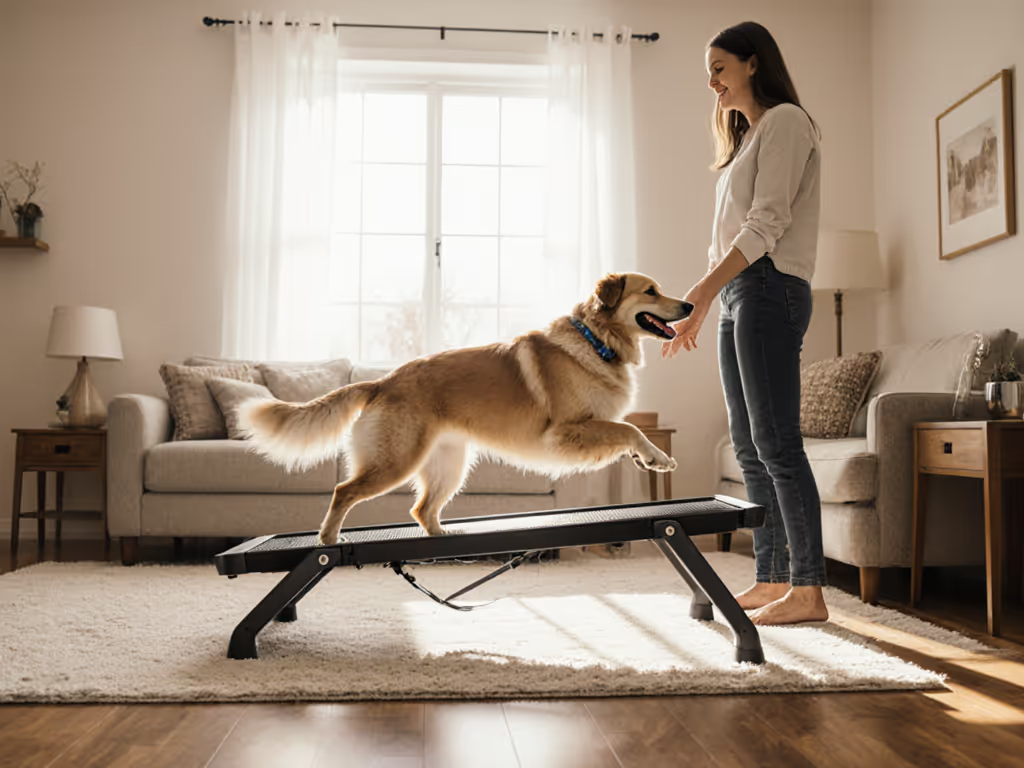
Here's a concrete roadmap:
Week 1: Research & Fit Check
Week 2: Purchase & Setup
Week 3: Familiarization
Week 4: First Sessions
Ongoing: Track and Adjust
A treadmill isn't the solution to a high-energy dog. It's one tool in a larger ecosystem of physical exercise, mental enrichment, training structure, and emotional regulation. The best outcomes happen when a treadmill is paired with:
A treadmill gives you agency on rainy days, at midnight, in heat waves, and when your schedule is chaotic. It's a guardrail against reactivity and burnout (for both you and your dog). Use it wisely, fit it to your dog's true needs, and invest in quality. Your dog's joints, and your sanity, will thank you for years to come.