K9 Turbine Joint-Safe Flirt Pole Review: Professional Training Tested
1st Nov•9 min read
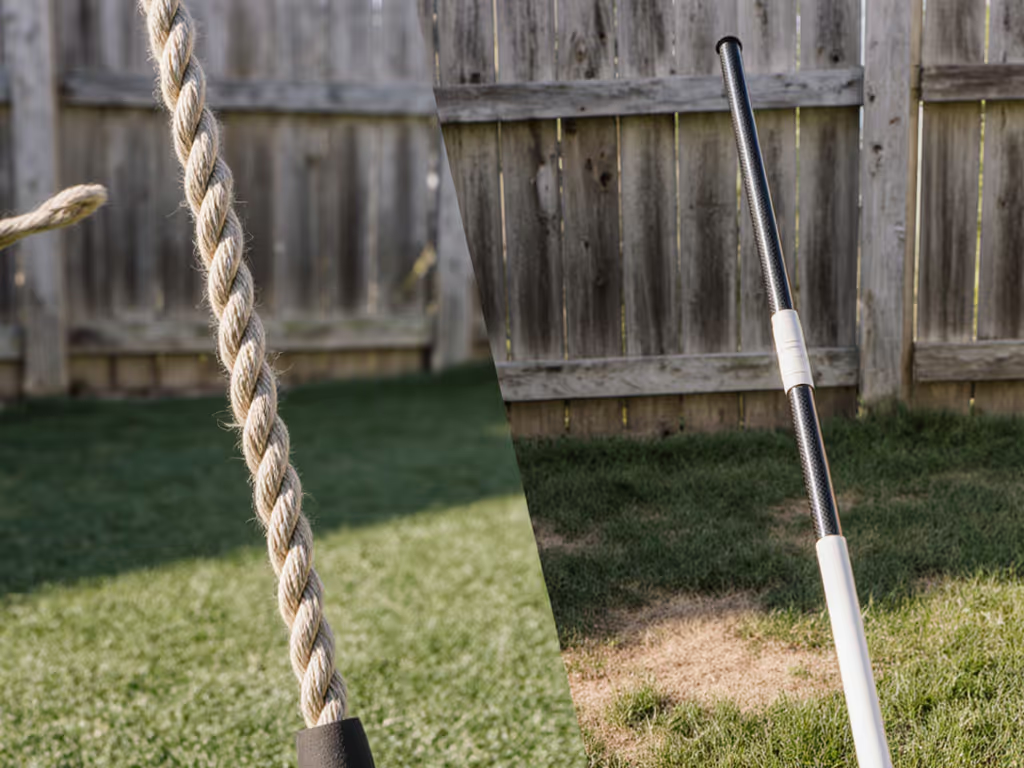
A rope vs rigid flirt pole comparison matters because these two design approaches fail in completely different ways, and picking wrong means your high-energy dog gets three weeks of boredom before the gear collapses into your closet. Flirt pole design analysis isn't really about flashiness: it's about materials, wear patterns, maintenance burden, and whether the thing still works after month six. If you're new to technique and safe play, start with our flirt pole training guide.
I've spent enough time watching gear corrode, fray, and lose structural integrity in real conditions (sleet, salt spray, a tiny apartment, and the chaos of multi-dog testing) to know that durability isn't an accident. It's a design choice, a materials decision, and a daily maintenance habit. When you're trying to burn off a Border Collie's excess energy in a confined space (or when you're juggling three dogs with different arousal profiles during winter when outdoor routes close), the equipment either serves you or haunts you.
Let's dig into how rope and rigid poles actually behave, why each one breaks, and what it takes to keep either one working long-term.
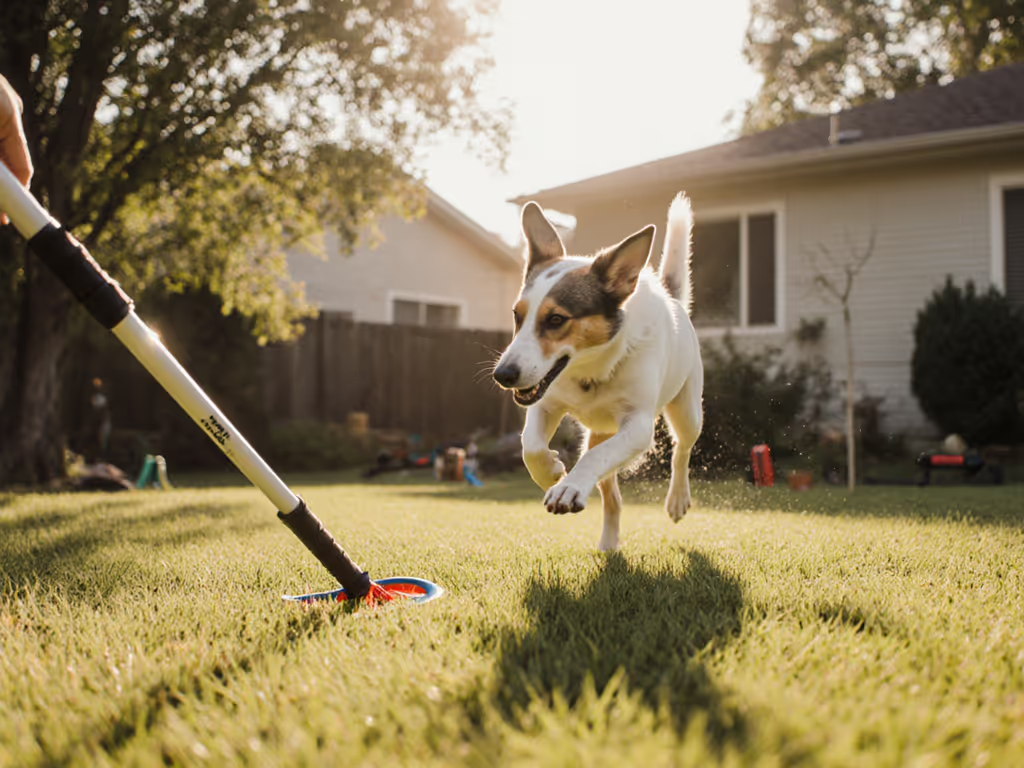
Before comparing designs, here's the reality: a flirt pole is one of the few tools that lets you exercise a reactive, high-drive, or space-limited dog in a confined area without risking a leash-lunge or a backyard meltdown. It works as prey drive channeling equipment (chase, catch, release, repeat) on your terms, in a containable space, and often in minutes rather than hours.
This matters for apartment dwellers, owners with time scarcity, and anyone dealing with extreme weather. A ten-minute focused flirt pole session can settle a dog that a thirty-minute walk barely dents. But only if the gear stays intact and the dog stays confident, uninjured, and engaged.
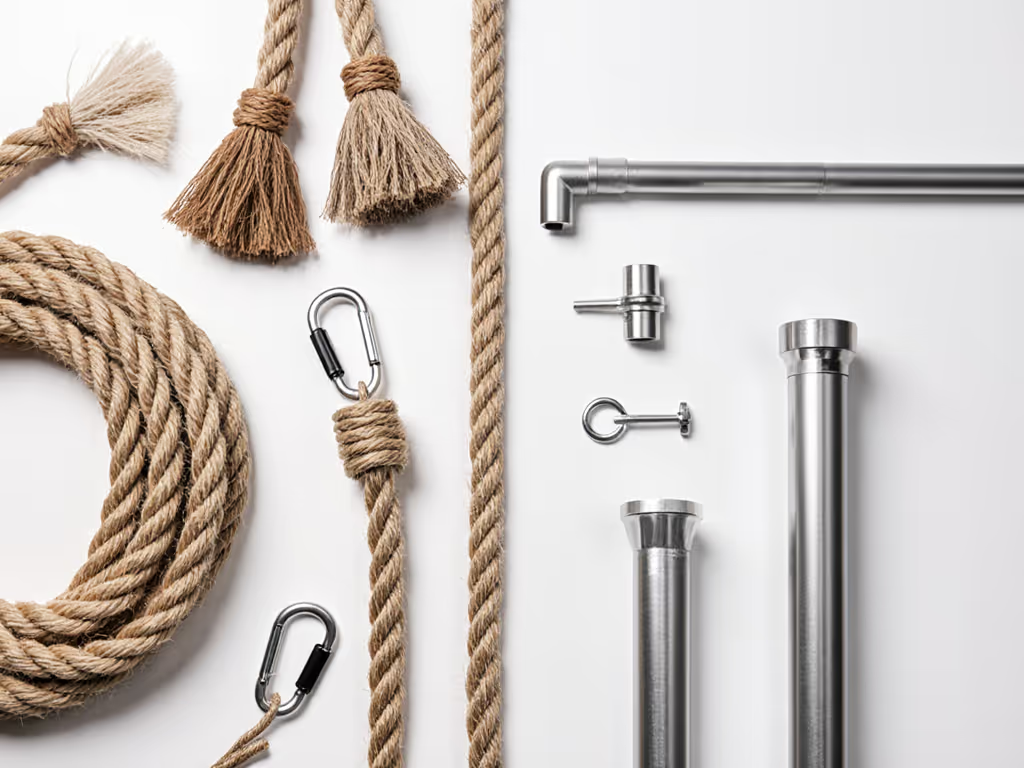
A rope-based flirt pole uses nylon, cotton, or blended braided rope (typically ½ to ¾ inch diameter) attached to a rigid pole via a swivel or ball bearing. The appeal is obvious: rope is flexible, forgiving if a dog crashes into it, and relatively inexpensive to replace if it frays.
Here's where the romance ends. Rope absorbs moisture like a sponge. In humid climates or wet storage (say, a damp basement in Portland or a monsoon-season apartment), rope develops mildew within weeks. I've personally hung saturated nylon rope in a storage closet and watched salt-induced corrosion transfer from one piece of gear to another. The rope itself didn't rot outright, but it became a vector for mold spores and made everything nearby smell like a locker room. To avoid mildew and corrosion transfer, follow our equipment care checklist for storage and drying.
UV exposure is another failure-mode nobody mentions in marketing copy. Nylon and cotton degrade under direct sunlight, losing tensile strength progressively. A rope that feels rigid on day one will become limp and unpredictable after 2 to 3 months of outdoor storage or repeated use in bright sunlight. When the rope loses its snap, the dog's experience changes entirely, the chase becomes less rewarding because the flurry and response feel sluggish.
Fraying is the obvious failure, but it's actually slower than expected if the rope is braided tightly and sealed at the ends. The real issue is that once a rope starts to fray, it harbors moisture and bacteria, accelerating degradation and creating a maintenance schedule that most owners abandon after month two.
In climates with extremes (intense humidity, freeze-thaw cycles, heat exposure), rope poles demand vigilance. If you're already struggling to keep a consistent exercise routine, adding a maintenance schedule is friction you'll likely abandon.
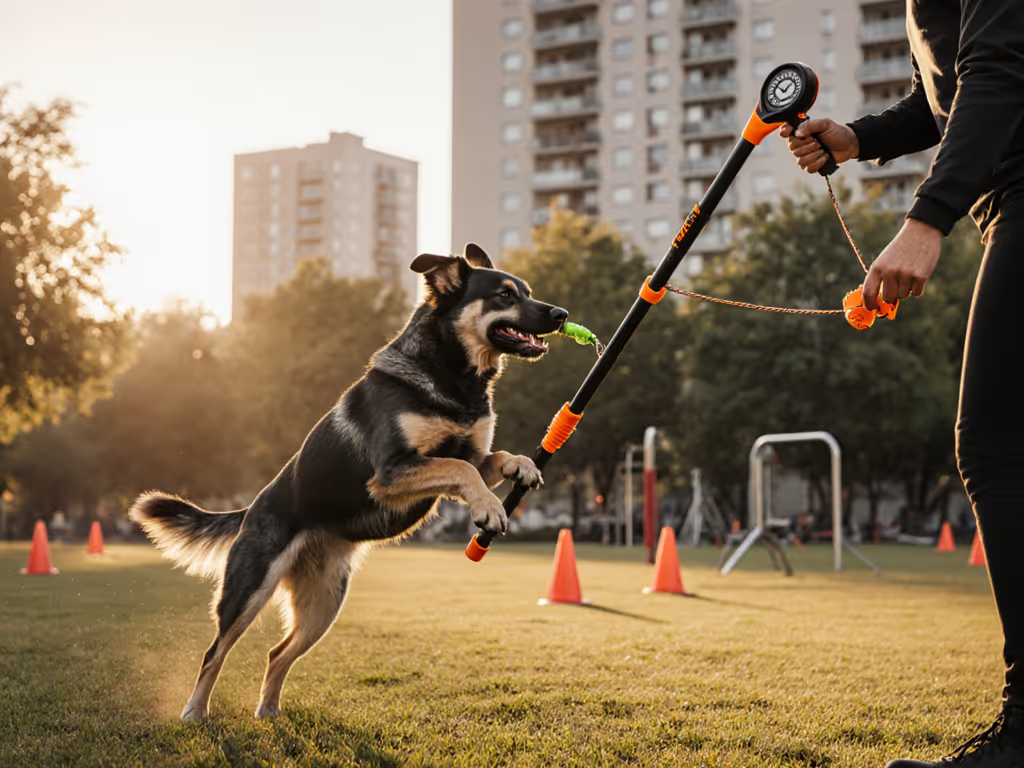
A rigid pole is typically a fiberglass, carbon fiber, or powder-coated steel rod (3/8 to ½ inch diameter) with an attached lure on a short cord or elastic tether. The lure attaches via a swivel or bolt point near the top.
The primary failure-mode is fatigue at the connection point. Every time a dog lunges and the pole flexes, stress accumulates at the base (or at the swivel). If the pole is insufficiently reinforced or the swivel is cheap (low-grade stainless), cracks or spalling appear after 3 to 6 months. I've tested poles that developed hairline fractures invisible to the naked eye, until one sharp tug and the pole snapped mid-session, startling the dog and creating a hazard.
Coatings and corrosion are the second major failure mode. Most rigid poles use spray-on enamel or powder coat, which sounds durable in print but chips with impact or flexing stress. Once breached, steel rusts rapidly from the inside out. Steel poles stored in high-humidity environments can rust through the coating within months if not properly maintained. I've shelved steel poles that looked intact but were structurally compromised beneath a thin veneer of rust.
Fiberglass poles avoid rust but develop stress-induced cracks under repeated impact and flex, especially if temperature swings widely (leaving and entering heated vehicles in winter, sun exposure in summer). The cracks start hairline and propagate, weakening the structure until the pole loses rigidity or snaps.
The third mode is swivel failure. The swivel or quick-link where the lure cord attaches corrodes, seizes, or spins loose over repeated lunges. Cheap swivels strip their threads or seize in salt-air environments within a few months.
The maintenance burden is lighter than rope (no drying, no mildew risk), but it requires you to develop a habit of inspection and intervention before failure occurs.
| Dimension | Rope Pole | Rigid Pole |
|---|---|---|
| Initial cost | $20 to $50 | $40 to $150 |
| Flexibility (forgiving on impact) | High | Low |
| Water absorption | Very high | None |
| Maintenance frequency | Weekly (drying, checking) | Bi-weekly (inspection, lubrication) |
| Failure onset | 6 to 12 months (fraying, moisture breakdown) | 6 to 24 months (corrosion, fatigue, swivel failure) |
| Repair ease | Easy (replace rope) | Difficult (structural repair often uneconomical) |
| Long-term cost | High (frequent replacement) | Lower (outlasts rope if maintained) |
| Weather resistance | Poor | Moderate to good (depending on coating) |
| Quiet operation | Yes | No (rigid pole can creak or snap audibly) |
Weather tests gear; your dog tests comfort; time tests value.
The real question is: which maintenance demand fits your life?
If you live in a high-humidity, wet climate (Pacific Northwest, Gulf Coast, tropical regions), a rope pole becomes a mildew factory unless you're obsessive about drying and storage. A rigid pole (especially powder-coated steel with stainless hardware) is worth the cost.
If you live in a dry, stable climate (Denver, interior Southwest, parts of California), rope poles are more forgiving, moisture and mold are non-issues, and UV fade is slow.
If you live in an extreme temperature zone (harsh winters with freeze-thaw, intense summer heat), rigid poles face stress from thermal cycling. Rope poles are more stable across temperature swings, but they still degrade in UV and moisture.
High-impact, collision-prone dogs (herding breeds, young labs, excited rescues who crash hard) do better with rope poles, which absorb energy. Rigid poles can snap if a 70-pound dog launches full-body into one.
Older dogs, puppies, or dogs recovering from joint issues benefit from the stability and predictable motion of a rigid pole, while rope can swing erratically, and inconsistent tension may stress healing ligaments. For broader low-impact options beyond flirt poles, see our arthritis-safe senior gear.
Reactive or anxious dogs need quiet, predictable equipment. Rope is silent; rigid poles can creak, rattle, or crack audibly, which can spike a nervous dog's arousal instead of channeling it. If fetch is more your dog's style, compare energy burn and safety in our flirt pole vs ball launcher guide.
Rope poles coil or bundle (minimal footprint) but need dry storage and can't be crushed by other gear. Rigid poles are bulky but less vulnerable to compression damage if you're stacking items in a small closet.
Both require a dedicated spot. If your closet is a chaos of jackets, vacuums, and seasonal gear, a rigid pole stored upright will eventually break. A coiled rope pole shoved in a corner will mildew.
Here's the hard truth: the better-designed pole means nothing if maintenance lapses after month two. I've seen premium rigid poles rusted into uselessness because the owner's routine evaporated, and I've watched rope poles become museum pieces after a single humid summer because nobody dried them properly.
The poles that stayed functional, the ones that didn't stink, didn't lose structural integrity, didn't need replacement, had one thing in common: their owners built a simple maintenance rhythm into their weekly or bi-weekly routine.
For rope poles, that means:
For rigid poles, that means:
The cost difference narrows dramatically when you factor in the likelihood of actually sticking with maintenance. For a broader look at when premium gear truly pays off, see our budget vs premium value test. A $40 rope pole replaced twice a year is $80 of recurring cost plus disposal friction. A $100 rigid pole maintained consistently for two years is $50 per year and one disposal event.
Buy once, use often - but only if you're honest about the maintenance reality.
The rigid pole lasts longer if you maintain it consistently. The rope pole lasts as long as your environment and maintenance discipline allow, typically shorter in wet climates, longer in dry ones.
Choose rope if:
Choose rigid if:
Neither is fire-and-forget. Durability, fit, and sustainable maintenance matter far more than marketing narratives around either design. The gear that works is the one you'll actually tend to, and the one you won't replace, upgrade, or retire out of sheer frustration after a season.
Test your own environment, your dog's play style, and your honest willingness to maintain. If you're skeptical of your follow-through, choose the design with the lowest maintenance barrier. A pole you actually use beats a theoretically superior pole gathering dust in a closet. Your dog's energy outlet depends not on perfection, but on consistency, and consistency depends on a system that fits your real life, not the ideal one.