Build Integrated Canine Fitness Plans with Multi-Equipment
12th Apr•9 min read
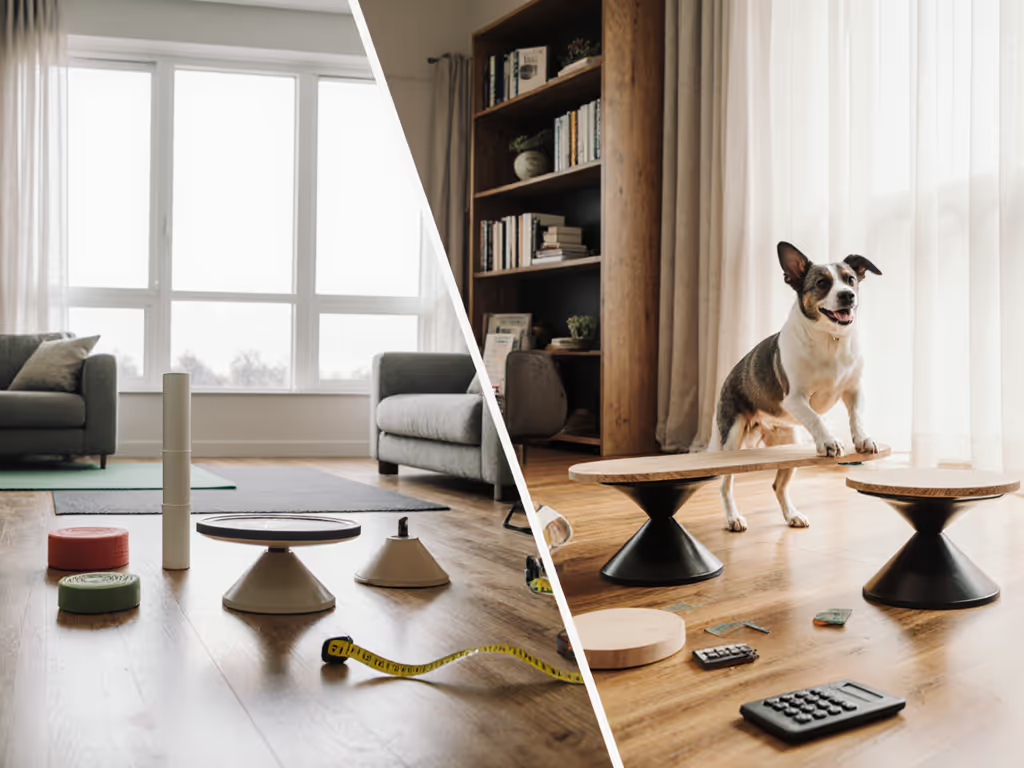
When you're retrofitting a high-energy dog into a 380-square-foot apartment, or squeezing a fitness plan into a Friday after-work window, the temptation to DIY is real. A quick search pulls up YouTube builds: balance trainers for $20 in plywood and paracord, suspension rigs from PVC scraps, homemade wobble boards. Professional kits cost 3-5x more. But here's the question that matters: DIY vs professional dog balance equipment isn't really about the price tag. For a broader look at value beyond sticker price, see our budget vs premium dog exercise equipment analysis. It's about whether the tool serves your dog's energy profile consistently over 18-36 months, and whether you'll actually use it without burning out on repairs, safety second-guesses, or storage grief.
I learned this in real time with Pico, my border collie. The temptation to hack together rigs was strong, and the budget whispered yes. But structured reps beat random play, and that principle applies to equipment as much as timing. Let me walk you through the math.
The headline numbers are undeniable. A basic DIY balance platform costs $15-40 in materials: half-inch plywood, dowel rod, 500-pound paracord, and fasteners from a hardware store. YouTube tutorials walk you through drilling, knotting, and basic assembly in 45 minutes to 2 hours. For budget-conscious owners in tight spaces, that $20 build versus a $90-150 commercial board feels like a no-brainer.
Customization is another draw. You can size the platform to match your dog's exact measurements (critical for toy breeds or oversized dogs where standard boards feel mismatched). You can adjust pivot resistance by tweaking cord tension, and you can build a collapsible design that folds into a closet when not in use.
Start with energy, shape the play, then pick the gear.
For apartment dwellers juggling noise codes and neighbors, this flexibility is genuine value. Get more picks that fold, stack, and travel well in our small-space dog exercise gear guide. A silent, flat-pack rig beats a 15-pound rigid board that announces every balance session.
Here's where the spreadsheet gets messy: affordable balance training isn't automatically achieved by picking the cheaper option.
Material durability and replacement cycles: Plywood softens with humidity and repeat contact. Paracord stretches and can fray; dowel rods split or develop weak points under load. In real-world use (dog climbing on/off 100 times per week, sweat and saliva contact, temperature swings) expect DIY rigs to show significant wear in 12-18 months. You'll sand, re-seal, or rebuild sections. One owner I consulted replaced her plywood pivot platform entirely after 14 months; her total real cost was the $40 initial build plus 6 hours of labor and $35 in new materials.
Safety unknowns: Commercial kits include load ratings, safety margins, and tested edge profiles. A DIY plywood platform? You're guessing. Is the dowel rod diameter strong enough for your 70-pound retriever launching at speed? Have you stress-tested the knots under dynamic weight, or are you eyeballing it and hoping? One miss (a split dowel or failed knot during a rapid dismount) means a dog sliding sideways into a paw injury or a confidence-shaking fall. DIY stability equipment safety isn't just about the build; it's about certainty, and DIY rarely provides it.
Resale and sunk cost: According to fitness equipment resale data, commercial gear holds 40-60% of its purchase value after 5 years, while homemade projects have near-zero resale value. If a DIY build costs $40 and fails or becomes irrelevant in 18 months, that's not a $40 loss; it's a $40 total sunk cost with no recovery path.
Time and decision fatigue: Building isn't free. Even at 2 hours, you're trading 2 hours of labor. Add troubleshooting (the knot isn't holding, the platform rocks unevenly, the dowel doesn't seat right), and you're at 3-4 hours. At even a modest personal hourly value of $25-40, you've just erased half or more of your supposed savings (before the rig is even in use).
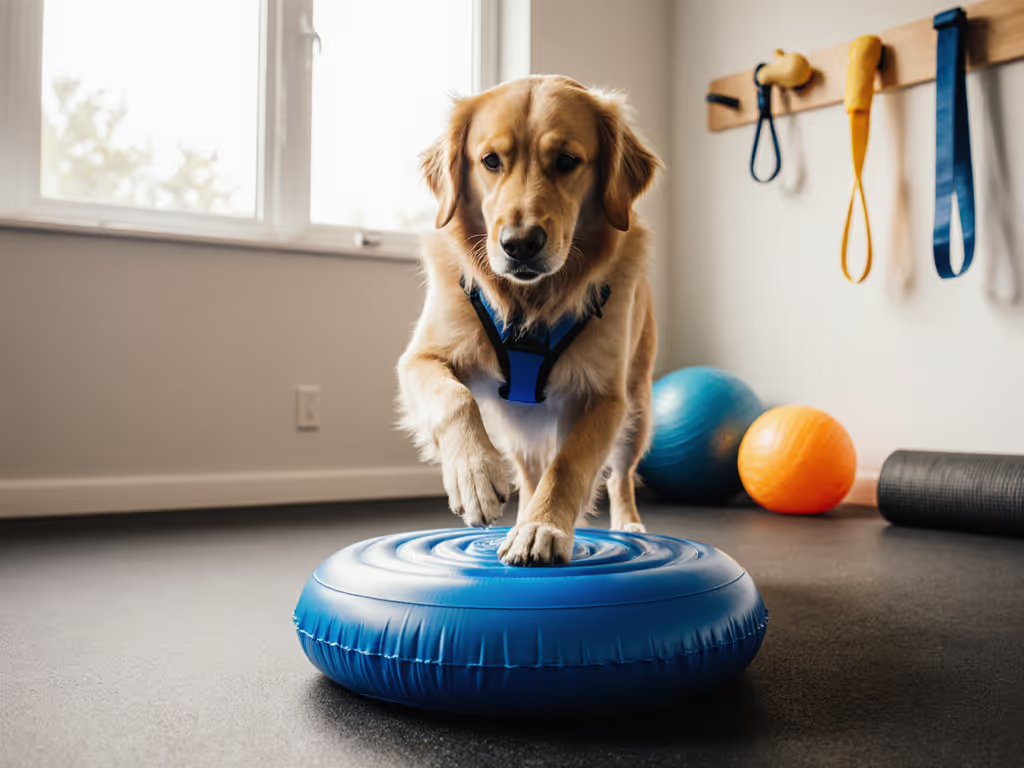
Engineering and load testing: Professional balance boards are engineered for specific load ranges (typically 25-150 lbs) with safety margins built in. If you're comparing specific platforms by adjustability and stability range, our adjustable dog stability gear comparison breaks down the trade-offs. The base, pivot system, and surface have been stress-tested across thousands of cycles. That engineering costs money, but it buys you certainty: you know the rig will perform as designed for 3-5 years minimum.
Consistency in design and surface: Commercial platforms use consistent materials (often high-impact plastic bases, precision-molded pivot bearings, non-slip textured surfaces) that don't degrade unpredictably. Your dog learns the feel and grip; the platform delivers the same feedback session to session. For anxious dogs or dogs learning balance work, consistency matters for confidence.
Warranty and replacement support: If a professional platform fails in year 2, most brands replace it or repair it. A DIY rig that cracks? You rebuild it yourself or scrap it. That support isn't trivial for owners already juggling time and mental load.
Space efficiency and aesthetics: Many commercial boards fold into compact profiles or pack neatly into dedicated storage. They're designed for living rooms, not relegated to garage corners. For apartment owners or multi-dog homes with storage constraints, professional rigs often solve that problem by design.
Cost barrier: The entry price is real. A quality balance board runs $80-200. Stacked with other tools (wobble cushions, cavaletti rails, balance discs) a small balance setup costs $300-500. For first-time buyers on tight budgets, that's a barrier to entry.
Less customization: You're buying a standard size and firmness. If your dog is 22 lbs and the smallest board is designed for 30+ lbs, you're either overshooting or reconsidering. DIY scores here: you can dial in exact dimensions.
Gear bloat risk: A $150 purchase feels like it should see daily use. Many owners buy professional equipment with good intentions, but without a cost-effective balance training plan attached, the rig gathers dust. Then it feels like a waste, and resentment follows.
In my experience, the sweet spot for apartment dwellers and time-pressed owners is this:
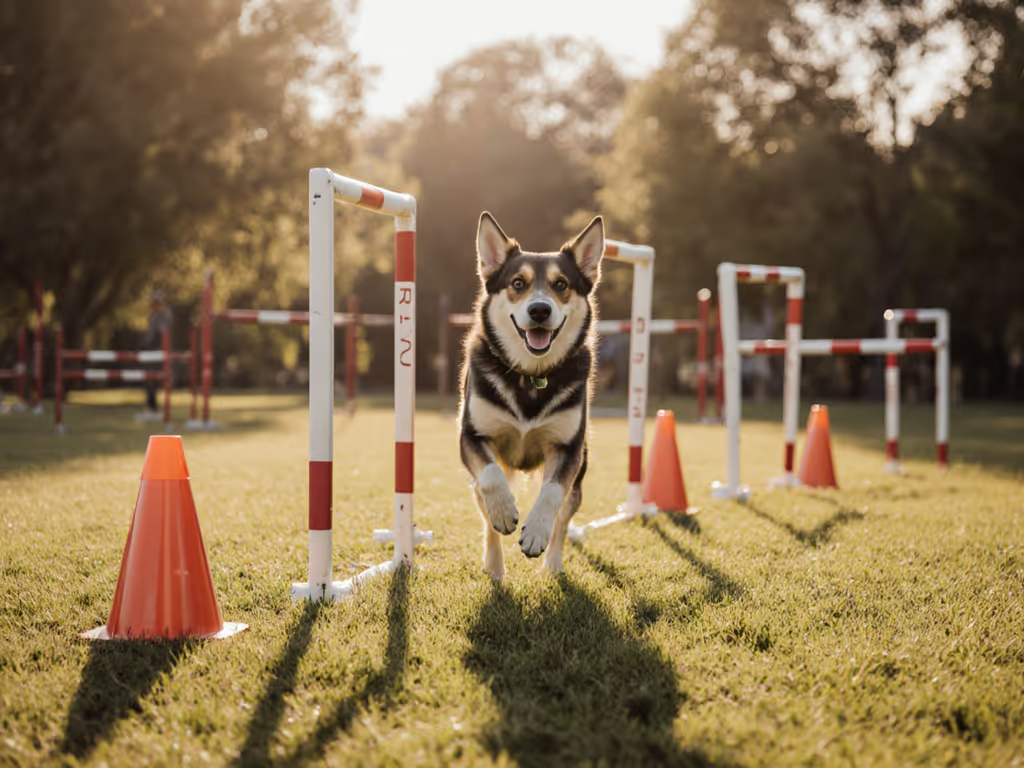
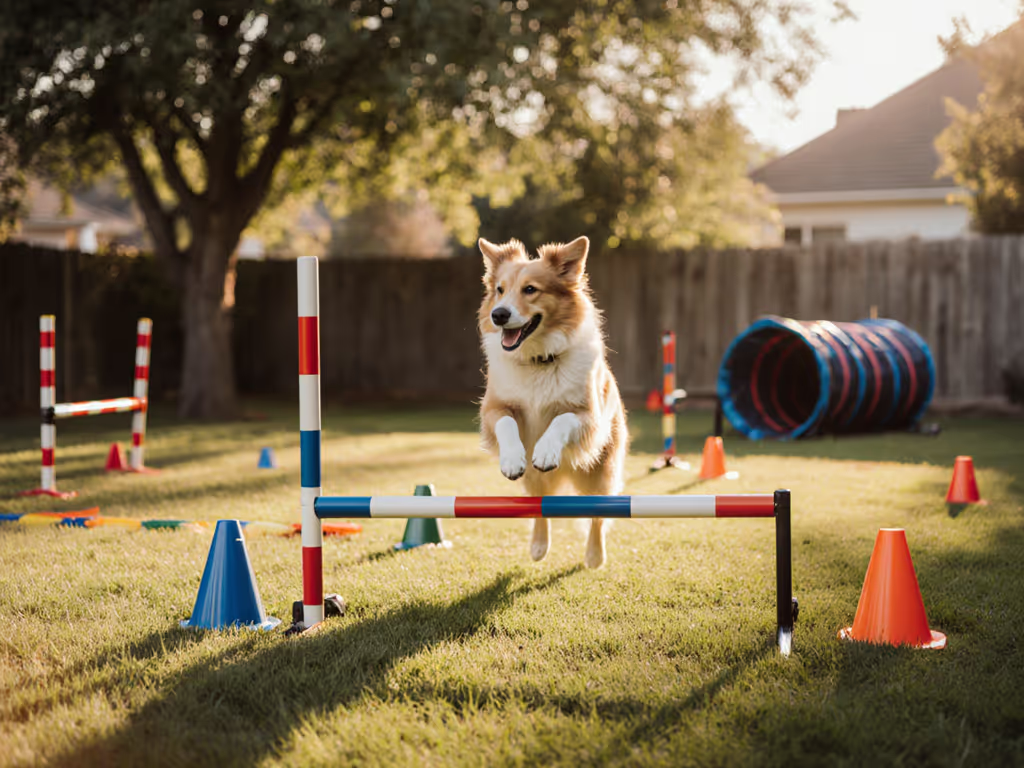
Invest in one durable, fold-flat professional platform (circa $100-130) as your anchor tool. It's your "forever" rig, the one you'll circuit with a collapsible hurdle, a treadmill, or scent work. Pair it with one or two low-cost DIY or semi-DIY add-ons (a wobble cushion made from a firm pillow + non-slip mat, or a simple balance disc from a clearance bin) for variety and to prevent equipment boredom. Before adding any air-filled tools, review our inflatable dog fitness safety guide to set safe inflation levels and progressions.
This approach sidesteps the trap of buying five DIY rigs that fail sequentially, while avoiding the overkill of a $500 multi-station setup gathering dust. You're optimizing for consistency, variety, and durability without chasing the perfect single purchase.
| Item | Cost | Lifespan | Use Frequency | Cost/Use (36 months) |
|---|---|---|---|---|
| Professional balance board | $120 | 36 months | 3-4x/week | $0.38 per session |
| DIY wobble disc (pillow+mat) | $18 | 12 months | 1-2x/week | $0.22 per session |
| Timeboxed plan (free template) | $0 | Ongoing | Daily reference | $0 |
| Total structured system | $138 | 36 months | Scalable | ~$0.60/session |
Compare that to five failed DIY builds at $40 each = $200 sunk with zero retention, and the math pivots sharply toward professional.
Regardless of whether you choose DIY or professional, DIY stability equipment safety and professional systems share one non-negotiable: progression must be timeboxed and load-managed. For a complete warm-up checklist and red-flag monitoring, see our dog exercise safety guide before you increase difficulty.
Critical safety checkpoints:
This progression timeline works whether your platform is plywood or injection-molded plastic. What matters is consistency: same surface texture, same pivot feel, same timing. A platform that shifts under your dog or fails midway through a session doesn't just waste time; it breaks trust.
Here's what the data tells us:
DIY balance training delivers real value only if you have the skills, time, and structural curiosity to iterate. It's a legit choice for someone building a broader home-training ecosystem or for a short-term project. But most dog owners buying their first balance tool are optimizing for results, not novelty. They want the dog to settle faster, to build stronger hind-end engagement, and to do it safely within 12-18 weeks.
That outcome map pulls toward professional equipment: one reliable platform, a clear progression plan, and the certainty that the rig won't fail mid-session. The $120 upfront cost is earned back in consistency over 6-12 months of actual use.
If budget is an absolute constraint (rent is tight, savings are thin) then a single, well-researched DIY build (not five experimental ones) paired with trainer guidance or video templates makes sense. But if you can swing $120-150, the professional route removes decision fatigue and delivers measurable ROI in both dog behavior (calmer settle, stronger proprioception) and your own peace of mind.
Structured reps beat random play, and structured equipment beats random builds.
The real value isn't in the gear itself. It's in the consistency it enables: the same feel underfoot, the same timeboxed intervals, the same progression pathway session after session. That structure is what transforms a balance platform from a novelty into a tool that works. Pick the path that lets you show up reliably, week after week, and the dog's energy will respond.
Build once, use often, and measure the calm that follows.