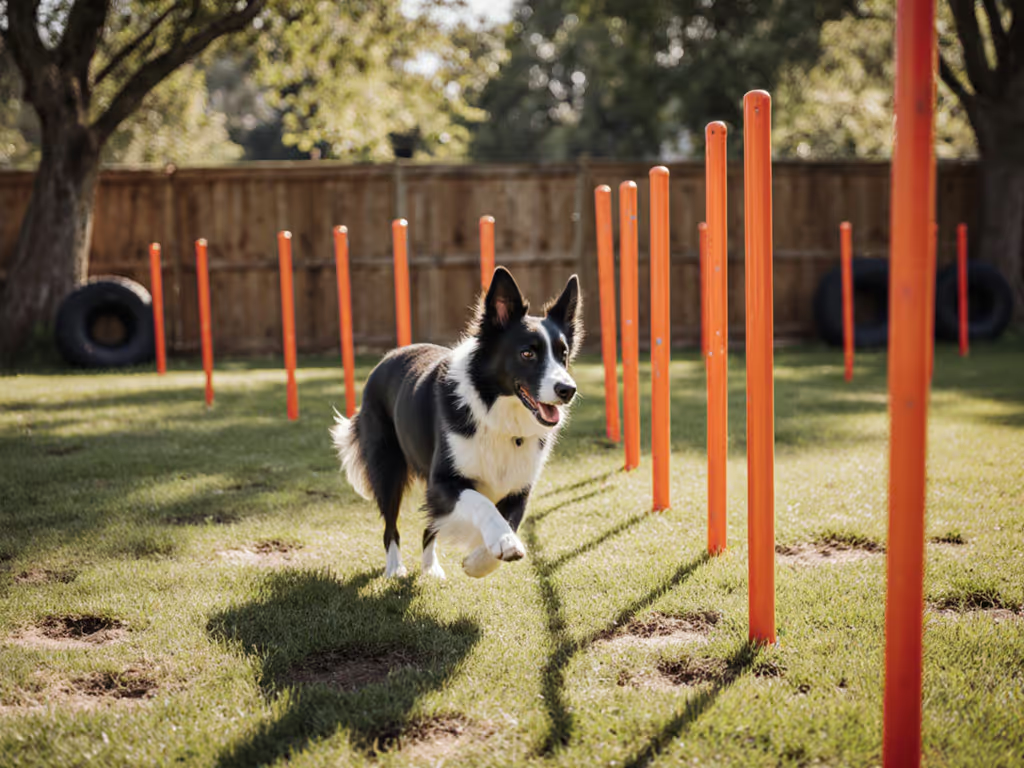
Dog Weave Poles: Select, Install & Train
23rd Feb•9 min read
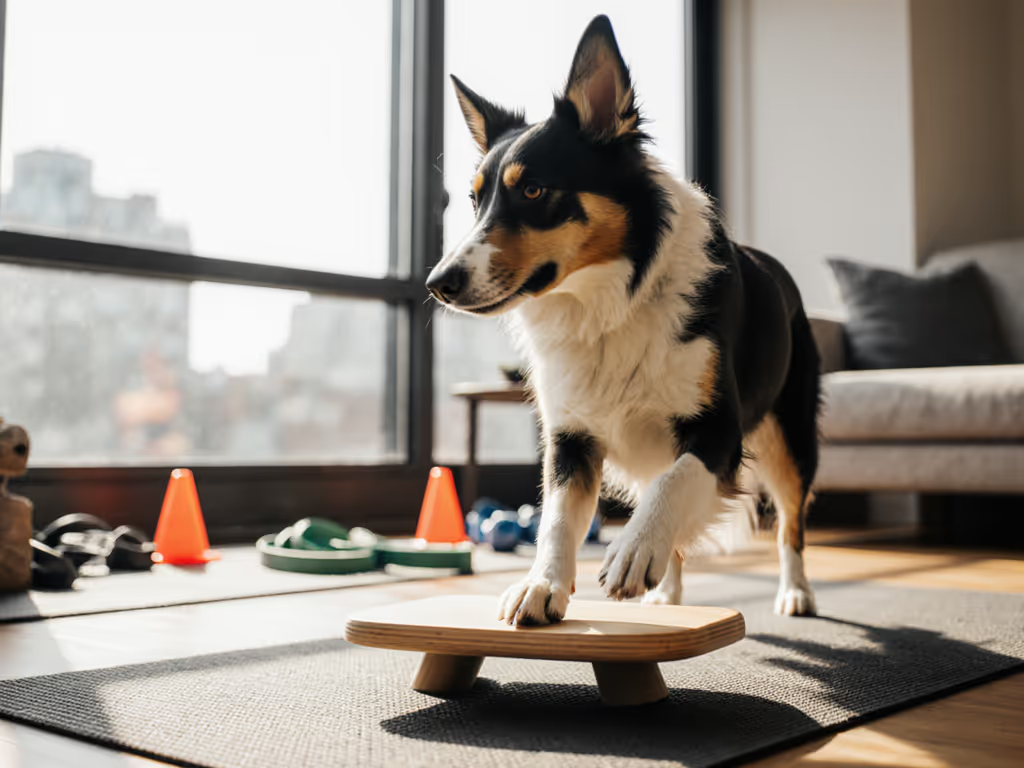
When your dog missteps on slippery floors or stumbles during sharp turns, it's not just clumsiness; it's a sign their canine proprioception training needs attention. This foundational dog balance science directly impacts joint longevity and emotional resilience, especially for apartment dwellers navigating tile floors or seniors managing arthritis. As someone who swaps high-impact fetch for ground poles and measured paw placements, I've seen how small, precise choices turn joint strain into confident movement. Today's guide translates complex biomechanics into space-efficient routines that honor your dog's physical limits, because protecting joints today builds the capacity for confident movement tomorrow.
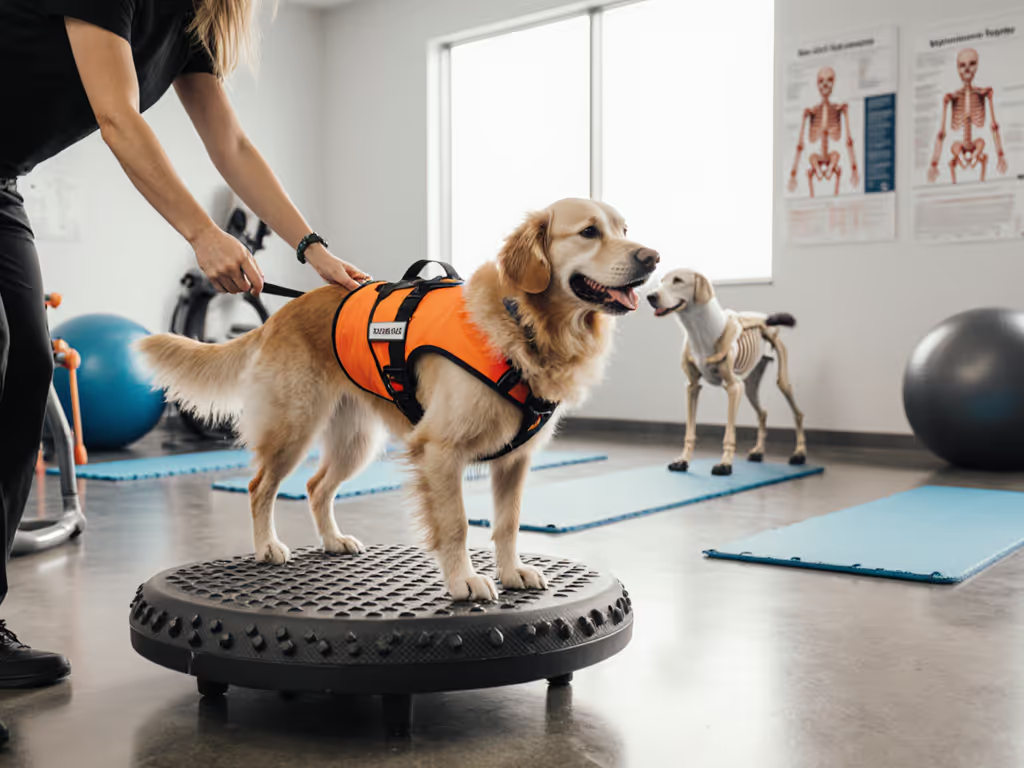
Proprioception is your dog's internal GPS: their neurological ability to sense limb position, movement speed, and spatial orientation without looking. It relies on neurological balance mechanisms in joints, tendons, and inner ears that feed constant data to the brain. Think of it as the silent dialogue between paw pads and cerebellum that prevents slips on hardwood or miscalculated jumps onto couches.
Unlike basic obedience commands, proprioceptive skills develop through controlled sensory challenges. A 2025 veterinary study demonstrated measurable improvements in postural stability (PS) after just four weeks of targeted training, with dogs showing significantly reduced weight-shifting errors during uphill, downhill, and perturbed standing tasks. For urban dog parents wrestling with limited space or reactive pups, this isn't just about elegance; it's injury prevention disguised as play.
Caution-first disclaimer: Never force exercises that cause hesitation or paw lifting. If your dog's nails click excessively on surfaces, add non-slip mats before progression.
Every misstep creates micro-trauma in ligaments and cartilage. Strengthening kinesthetic awareness for dogs teaches precise weight distribution during movement, reducing shear forces on vulnerable joints like stifles and shoulders. For example, when a Border Collie pivots during herding, sharp proprioception lets them shift weight before the turn (not mid-stride), eliminating dangerous lateral stress.
Surface notes matter critically here:
Age/weight modifiers:
For a deeper dive on when to use stable versus unstable surfaces, see our surface choice science. This aligns with my foster case where swapping fetch for ground poles reduced soft-tissue strain. By measuring paw placement and shortening turns, we gave her nervous system time to recalibrate (not just mask pain).
Absolutely, and it's rooted in physiology. When dogs lack sensory feedback training, their brains compensate with hypervigilance. A startled Chihuahua who scrambles backward off a step isn't "spooked" (they genuinely didn't feel where their hind paws were). This constant uncertainty fuels anxiety loops.
Targeted proprioception exercises:
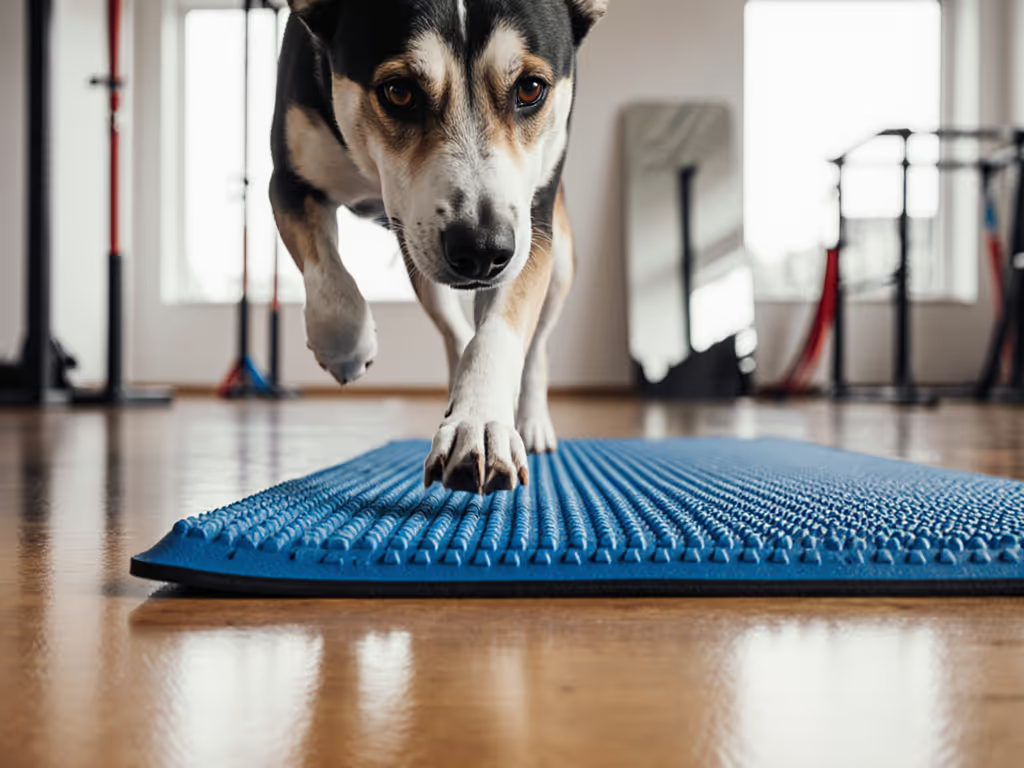
Real-world impact: I worked with a noise-phobic rescue who'd bolt indoors during thunderstorms. Instead of desensitization CDs, we started with backward steps on a textured mat. Within three weeks, her freeze response decreased by 70% (because comfort is a training aid). When dogs trust their physical selves, emotional regulation follows. If your dog is anxious, explore stress-reducing exercise gear that builds confidence without overstimulation.
Forget expensive equipment. Effective canine coordination development thrives in constrained spaces when you prioritize quality of movement over complexity. These require zero specialty gear:
The Paw Placements Drill:
Weight Shifts on Stable Surfaces:
Backward Slinking:
Critical fit check: If elbows wobble during weight shifts, reduce surface instability. Start on flat floor before adding texture.
Forget apps or wearables. True proprioceptive gains show in daily life behaviors:
| Indicator | Beginner Sign | Progress Sign |
|---|---|---|
| Stair navigation | Paw scuffing on edges | Silent, precise placement |
| Rug transitions | Sudden halts/jerks | Seamless weight shifts |
| Toy pickup | Whole-body lunge | Targeted neck extension |
Note: Puppies may take 4-6 weeks to show clear changes; seniors often improve within 10 days due to neural plasticity. Celebrate "two-minute wins" - like nailing three consecutive backward steps - rather than marathon sessions.
Red flags requiring immediate pause:
Progression rule: Only advance when your dog performs an exercise with 90% fluidity for 3 consecutive days. If they've mastered stepping on circles, try alternating front/hind paw lifts, but only if joint angles stay neutral (no splayed elbows or hunched backs).
Tomorrow, before breakfast:
Observe: Does weight shift toward you? Do nails dig in? This reveals your starting point. If they stand calmly for 5 seconds, you've found your baseline. If they wobble, reduce the distance to 18 inches. This tiny assessment (repeated weekly) builds the joint-sparing habits that let dogs move freely for years.
Comfort isn't just a feeling; it's measurable joint preservation. By protecting your dog's proprioceptive pathways today, you're not preventing movement; you're guaranteeing more joyful, pain-free years together tomorrow.